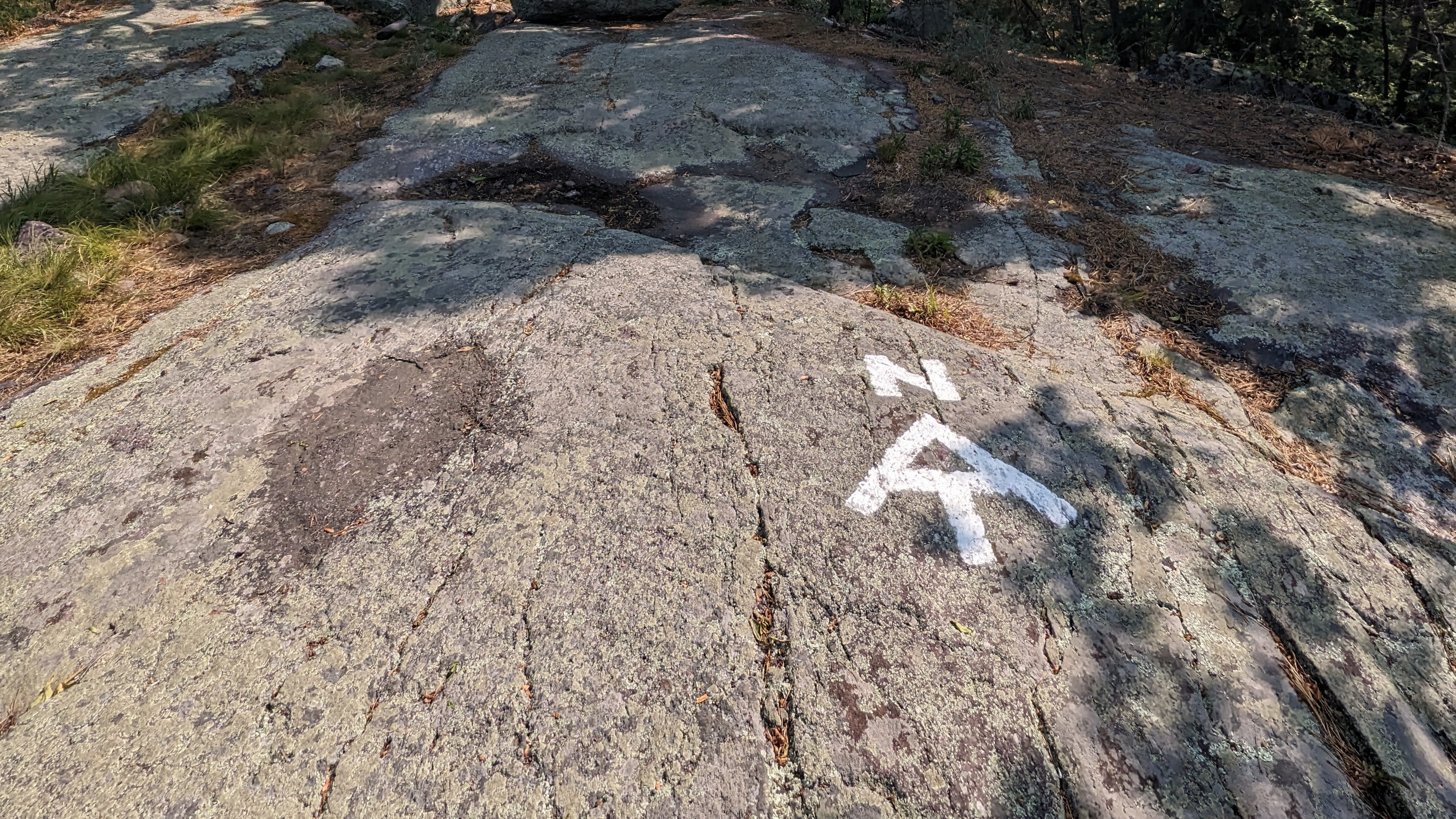
Perhaps you saw a documentary. Maybe you stumbled across a quiet footpath leading into the Eastern US undergrowth. Or perhaps you met a hiker somewhere, and got to hear their stories from living day-to-day on the trail. However you were introduced to it, you now want to complete an Appalachian Trail thru hike.
My friend, I’m so excited for you.
In 2023, I set out to complete my own thru hike, and the resulting journey has become one of the best experiences of my life. I hope that it will be as life-changing and empowering for you as well!
But before you step foot on the trail, there’s so many questions to be asking first. How do you plan a trip this momentous? What gear do you need? What’s the right budget? How do you get to town and back?
In this article, we’ll be covering:
- Before you head on trail
- Gear for thru hiking the Appalachian Trail
- Planning your Appalachian Trail thru hike
- Hiking the Appalachian Trail with a dog
- States on the Appalachian Trail
- Trail life
- Animals on the Appalachian Trail
Before you head on trail

Starting off on a 2,200 mile journey takes special consideration. Here are a couple of things to think through before you start buying gear and planning out your trip.
Mentally prepare for your thru hike
Hiking the Appalachian Trail is an incredible journey. It’s full of trailside sunrises, incredible sunsets, mountain views, trail families and trail magic, and so much more. Don’t get me wrong: it will be one of the best things you ever do in your life.
And it will also be one of the hardest.
There will come a time (probably when you’re in Virginia, if you’re NOBO) when you realize this really isn’t fun all the time. You’ve fought with blisters, you’re tired of getting rained on, you’re realizing how unappetizing gas station food really is, and you really don’t want to make this next climb just to descend into another valley again.
Why am I even out here? you’re going to ask yourself.
Before you even get on trail, you need to be mentally ready and prepared. Here are 9 ways to mentally prepare for a thru hike.
How much does it cost to hike the Appalachian Trail?
People have completed an Appalachian Trail thru hike with budgets anywhere from $3,000 to $15,000. It depends on what gear you already have and what experience you want. However, the average budget is around $1,000 a month, or $7,000 total, including gear.
Budgeting $7,000 provides you with enough money to stay in some hostels, take the trains to D.C., or New York City if you’d like, eat out in town sometimes, and eat decently well on trail. However, $7,000 does not account for multi-day zeros, staying in hotels or private rooms, eating out every town, slackpacking, etc. The more things or in-town experiences you want to have on trail, the more money you’ll need to plan on spending.
Is the Appalachian Trail dangerous?
Despite the dangers that everyone warns you about on the Appalachian Trail, I never encountered a situation that dangerous. By most accounts, walking the AT is actually safer than walking through your own town. However, there are some dangers that do need to be accounted for, including humans, wildlife, weather, and terrain.
Before you panic, take a deep breath. By being aware of your surrounds, respecting your environment, and listening to common sense, the AT can be an incredible and safe journey.
Thru hike gear list
The gear you take on your trip makes a huge difference. Remember that you’ll need to rely on this gear 24/7 for the next 2,200 miles.
The big three
You’ll often hear reference to “the big three” of your gear. This means your backpack, your shelter, and your sleeping bag. These are often the heaviest of your gear, but they’re also some of the most important. If you’re hiking on a budget, consider spending a bit extra on these three and skimping a bit on your other gear.
Backpack

Your backpack is of utmost importance. It’s what you’re going to be wearing day in and day out for six months, and needs to be sturdy enough to hold your gear and withstand the elements of the East Coast. Backpacks are not a one-size-fits-all. Instead, it’s best to research multiple different types, and find the one that suits you best. However, here’s a couple things to keep in mind:
- Weight.
- Capacity.
- Comfort.
- Material.
I’ve compiled a list of the most common backpacks you’ll see on the AT. I personally used the Osprey Eja 58.
Shelter
Your shelter is also important. While the AT does have shelters, you’ll want to make sure you always your own, whether a tent, a hammock, or a bivy. If the shelter is full, you want to set up at a dispersed shelter, or maybe you get to the shelter and realize that the mice have overtaken it. The AT is wooded enough that you can do a hammock the entire trail.
When you’re looking for a shelter, consider these things:
- Weight.
- Durability.
- Ease of assembling.
- Size.
Looking for a tent? Here are some of the best backpacking tents to get you started on your search.
Sleeping bag or quilt
Your sleeping bag or quilt can be the difference between a comfortable night and a miserable one. While you may not think that temperatures can get that cold in the southern states or during the summer, a mountaintop can indeed be a chilly place. I would not recommend a sleeping bag rated higher than 30 degrees. I personally took Mountain Hardwear’s Bishop Pass (rated for 15 degrees) and it kept me warm on some really cold nights. If you prefer a quilt, I love my Featherstone Moondance 25.
Here’s a list of some of the best sleeping bags on the market right now.
There are two main types of sleeping bags: down or synthetic. They both have different pros and cons.
Down sleeping bags are made from down feathers and are very warm. They’re lightweight and extremely packable. However, they’re typically more expensive than synthetic bags and they don’t do well when they’re wet.
Synthetic bags are cheaper than down, and can still hold heat in when they’re wet. However, they’re usually heavier and don’t pack quite as tight as the down bags do.
I prefer my down bag and didn’t have issues with it. Even though the AT is a wet trail, you can keep your sleeping bag in a contractor trash bag or a waterproof compression bag and it will stay fine.
Hiking boots vs trail runners

Here’s a bold statement in the thru hiker world: I hiked the my Appalachian Trail thru hike in Lowa GTX Mid Hiking Boots. Why? Because I love them, they work well for my feet, and I felt comfortable and stable in them. And because I’m incredibly stubborn. (It’s a common trait in thru hikers).
People love to go back and forth on what the correct thing is that you should do with your feet. However, when debating footwear, it’s always important to remember this: It’s going on your foot. So take advice from other people about what brands they like, etc., but make your final decision based on what works best for you.
There are some pros and cons to each one.
Hiking boots
Hiking boots are better suited for colder weather and rough terrain. If you’re starting early on trail, it might be worthwhile to wear hiking boots during the snow and switch over to trail runners when it gets warmer. See some of my favorite hiking boots here.
Pros:
- Support and stability
- Durability
- Waterproofing
- Tougher terrain
Cons:
- Weight
- Stiffness
- Doesn’t dry quickly
- Unbreathable
- Expensive
Trail runners
Trail runners are the most common form of footwear you’ll see on the trail. They’re lightweight and breathable, making them good for long, hot days or days where you’re fording rivers.
Pros
- Lightweight
- Breathability
- Flexibility
- Dry quickly
- Comfort
- Affordable
Cons
- Less ankle support and protection
- Lack of durability
- Lack of waterproofing
- Traction
Other gear recommendations
You can find my full backpacking gear checklist (including a printable version) here. However, here are a couple of gear recommendations I have specifically for the Appalachian Trail.
- Rawology Cork Massage Ball | I personally didn’t have one on trail, but I wish I did. Whenever someone else had one and let me borrow it, my feet were always so thankful.
- Garmin inReach Mini 2 | This functions as a satellite communicator to keep you in touch with your friends and family and as an SOS device. However, it’s very common on the AT, and you can also use it to communicate with hikers you meet along the way.
- MSR Pocket Rocket Deluxe | I used this stove for my thru hike and truly loved it! The fuel is readily available, it burns well, and is very lightweight.
- Nitecore 10000 Power Bank | This is the power bank I used on trail and it worked extremely well. Charges decently fast, held about three full phone charges per use, and is lightweight. This lasted me between each town. If you need more power between each town, buying two is a solid option.
Planning your Appalachian Trail thru hike
One thing I learned quickly was not to plan too far ahead. The trail always seems to have a way of disrupting even the best thought out plans. Make sure you do your research, know what’s coming up, make a basic plan… and then be ready to scrap the plan and go with something entirely different.
For me, I had a time constraint to come back due to my job. Therefore, I had a couple of milestones set up of when I needed to reach certain markers. However, for the day-by-day planning, I’d typically do that in town and simply plan from restock to restock.
There are some things that can be planned out ahead of time, however.
Northbound, southbound, flip flop on the Appalachian Trail

One important aspect of your planning is to know which way you’d like to go on trail. Each direction has its pros and cons.
Northbound
This is the most common direction for hikers, with the Appalachian Trail Conservancy reporting that 83% of hikers chose to go NOBO in 2022. Northbound hikers start at Springer Mountain and hike north to Katahdin.
Pros:
- More trail culture and community
- Hiking through the spring flowers
- Well-established direction means more resources and trail magic
Cons:
- Deadline to get to Katahdin
- Can feel crowded, especially in the first 200-300 miles
Southbound
Seven percent of 2022’s hikers chose to go SOBO, which means starting at Mount Katahdin and walking south to Georgia.
Pros:
- Much less crowded
- Hiking through the summer into the fall
- Don’t need worry about Springer Mountain closing on you
Cons:
- Less resources, trail magic, and trail community
- Hike the hardest part of the trail first
- When you can start depends on when Katahdin is opened up for the year
Flipflopping
Nine percent of hikers in 2022 chose to flip flop. This means starting somewhere other than Katahdin or Springer and change their direction at some point to fully complete the trail.
Pros:
- Choose your own route. If you want to walk home, avoid crowds, see certain parts during certain seasons, etc, you can.
- Fits better to your time schedule. A lot of flip-floppers have time constraints that make it difficult or impossible to start at either terminus.
Cons:
- Hit or miss with the trail magics and trail community since you’re not part of either the NOBO or SOBO bubble.
- Logistics can be difficult.
When should I start my thru hike?
When you’re looking forward to a thru hike, it’s easy to want to start right away! You do need to do some careful planning based on which direction you’re going and what weather you’re prepared to handle.
If you’re going NOBO, you’ll need to plan around:
- Cold weather at the beginning of your hike in the Georgia and the Smokies
- When Katahdin closes (typically around Oct. 15)
- “The Bubble” or when the most people will be starting
If you’d prefer more of a less popular starting date, consider starting before March 10. However, you’ll definitely be encountering some cold weather during that time. Most people start their NOBO thru hike between March 15 to April 15, though some people start as early as January 1.
If you’re going SOBO, you’ll need to plan around:
- When Katahdin opens (usually around June 1)
- Weather going through the Whites
- Cold weather at the end of your hike through Tennessee, North Carolina, and Georgia
Keep a close eye on Katahdin when you’re preparing for a SOBO hike. You may be able to start earlier depending on when the park opens access to the summit. Most SOBO hikers plan on starting in June.
Permits on the Appalachian Trail

There’s no permit required to thru hike the Appalachian Trail, unlike the PCT. However, there are a couple of parks that require permits to hike through them. They’re not hard to get but make sure you know where they are, how to get them, and when you need to get them as your planning your Appalachian Trail thru hike.
These parks require permits:
- Great Smoky Mountains National Park | North Carolina and Tennessee
- Shenandoah National Park | Virginia
- Baxter State Park | Maine
In the White Mountain National Forest, there aren’t any permits required to stay there. However, they do have fees per campsite and hut.
Planning resources

I used two main resources when planning out my miles and for keeping track of what was coming up on my thru hike.
AWOL Guide | I bought this guide as a PDF on my phone. It has so many good resources about miles, things coming up, trail towns, resupplies and restocks, and much more. Because of how it’s set up, it make it much easier to do week-by-week or restock-by-restock planning.
FarOut | This app is another hotspot of information. FarOut makes it easy to judge distances for the day, find dispersed camping, judge elevation, and more. Additionally, the comments let you hear from other hikers what the conditions are: bad shelter, water dried up, trail magic up ahead, etc.
Favorite books about the Appalachian Trail
While these books might not be the best for planning your Appalachian Trail thru hike, they do help you dive into the history and lore of the trail.
- A Walk in the Woods by Bill Bryson
- Grandma Gatewood’s Walk by Ben Montgomery
- Hiking Through by Paul Stutzman
- Becoming Odessa by Jennifer Pharr Davis
- Mud, Rocks, Blazes by Heather ‘Anish’ Anderson
Hiking the Appalachian Trail with a dog
Bringing dogs on the Appalachian Trail can be a hotly contested subject sometimes. It’s up to you to make the best decision for yourself and your pup. As you decide, think about these things.
- Expense | Hiking with your pup will be more expensive. You’ll need to buy their food, gear, pay any vet bills, arrange for care when they can’t be on trail, and oftentimes, will need to pay for private rooms at hostels or pet-friendly rooms instead of sharing the bunkhouse.
- Weight | Hiking with your dog also means that you’ll need to carry their gear, food and a bigger tent. While your dog may be able to help with some of it, you’ll need to make sure you can carry it yourself in case they get injured.
- Shelters | Not everyone is comfortable with dogs. You may be asked to stay out of shelters and you’ll need to be considerate sharing common spaces if someone’s allergic or afraid of dogs.
- Training | Is your dog well-behaved? Will they park through the night? Do they listen to you well? Are they comfortable with large groups of people and other dogs?
- Personality | It’s also important to ask yourself if your dog is the type of dog who wants to do a trip like this. If your dog isn’t high-energy or prefers lounging at home, they’re not going to enjoy hiking fifteen-mile days for six months. It’s up to you to know them and to choose what’s best for them.
There are two parks that don’t allow dogs. As you travel through these parks, you’ll need to find someone to care for your dog.
- Great Smoky National Park
- Baxter State Park
States on the Appalachian Trail
The Appalachian Trail goes through 14 different states: Georgia, North Carolina, Tennessee, Virginia, West Virginia, Maryland, Pennsylvania, New Jersey, New York, Connecticut, Massachusetts, Vermont, New Hampshire, and Maine. Explore the AT with this state-by-state guide.
Trail life
Spending so much time on trail away from typical society creates a subset of culture: trail culture. Here’s a couple of things to understand before you head on trail.
Appalachian Trail shelter etiquette

Shelters: love ’em or hate ’em. Most thru hikers enjoy the social hub that the shelters provide, especially when they’re placed near water sources, have bear cables or bear boxes, and the beloved privies. They can be a source of frustration though, if hikers aren’t being respectful. Here’s a couple of tips.
Spaces are first-come, first-serve. When you get to the shelter, throw out your mat first thing so people know that spot is reserved and there aren’t any awkward situations.
Don’t hog space. Especially if it’s a rainy night, multiple people are going to want to sleep in the shelter. Don’t spread your gear all over or claim extra space when someone really just wants to get out of the rain.
Bring earplugs. If noise bothers you when you sleep, bring earplugs. You’re going to be sharing the shelter with 5-20 other people, who will be rolling in their sleep and snoring. If you don’t think you can sleep in that situation, consider tenting.
Respect hiker midnight. Hiker midnight is when the majority of thru hikers head to bed, usually between 7 p.m. to 9 p.m., depending on when the sun is going down. Don’t use this time for loud conversations or noisy tasks. Respect your fellow hikers’ sleep.
Trail magic
Trail magic is when people decide to help hikers by providing food, supplies, or services to hikers for free. This could be as simple as a hitch into town, pressing $20 dollars into your hand to buy some food, or handing you some water at a trail head. I’ve also seen entire churches and groups of people come out and provide freshly grilled hamburgers and hot dogs, pulled pork sandwiches, an entire resupply, and more.
Trail magic is a special part of the trail culture. Respect it. Cherish it. Always show your gratitude for it. And when you get a chance, pass it on.
Animals on the Appalachian Trail

You’ll find a wide variety of animals on your Appalachian Trail thru hike, including some very rare species and some animals you might not expect.
- Bears. The AT is home to black bears along the entire length of the trail. They’re more prevalent in the south, and get a little bit more timid in the north (where they’re hunted) but you’ll always want to be mindful of them.
- Moose. These beauties are present in Vermont, New Hampshire, and Maine. Be careful of them, but if you see one, consider yourself lucky.
- Rattlesnakes and other snakes. The AT is home to rattlesnakes and copperheads, both of which are venomous. Watch your step but as long as you respect them, they’re likely to respect you. You’ll also see all sorts of harmless snakes such as rat snakes, garter snakes, and more.
- Eastern newts. You’ll see these little newts in their bright red juveniles stage all over the trail. Watch your step after it rains, because they’ll be everywhere. Don’t believe me? Trying counting them one day.
- Mice, rats, and porcupines. You know who else loves your food as much as you do? That’s right. All shelters have their resident mice and rats, but a couple shelters had visiting porcupines too.
- Ponies. The wild ponies in the Grayson Highlands make for such a fun day! If you stay at the two shelters in the Grayson Highlands, it’s possible you’ll wake up to them surrounding your tent.
- Cows. You might not have been expecting this one, but the AT actually passes through quite a few farmer’s fields. Be respectful of the cows and of the land; it’s a private landowner allowing you to walk through!


Leave a Reply