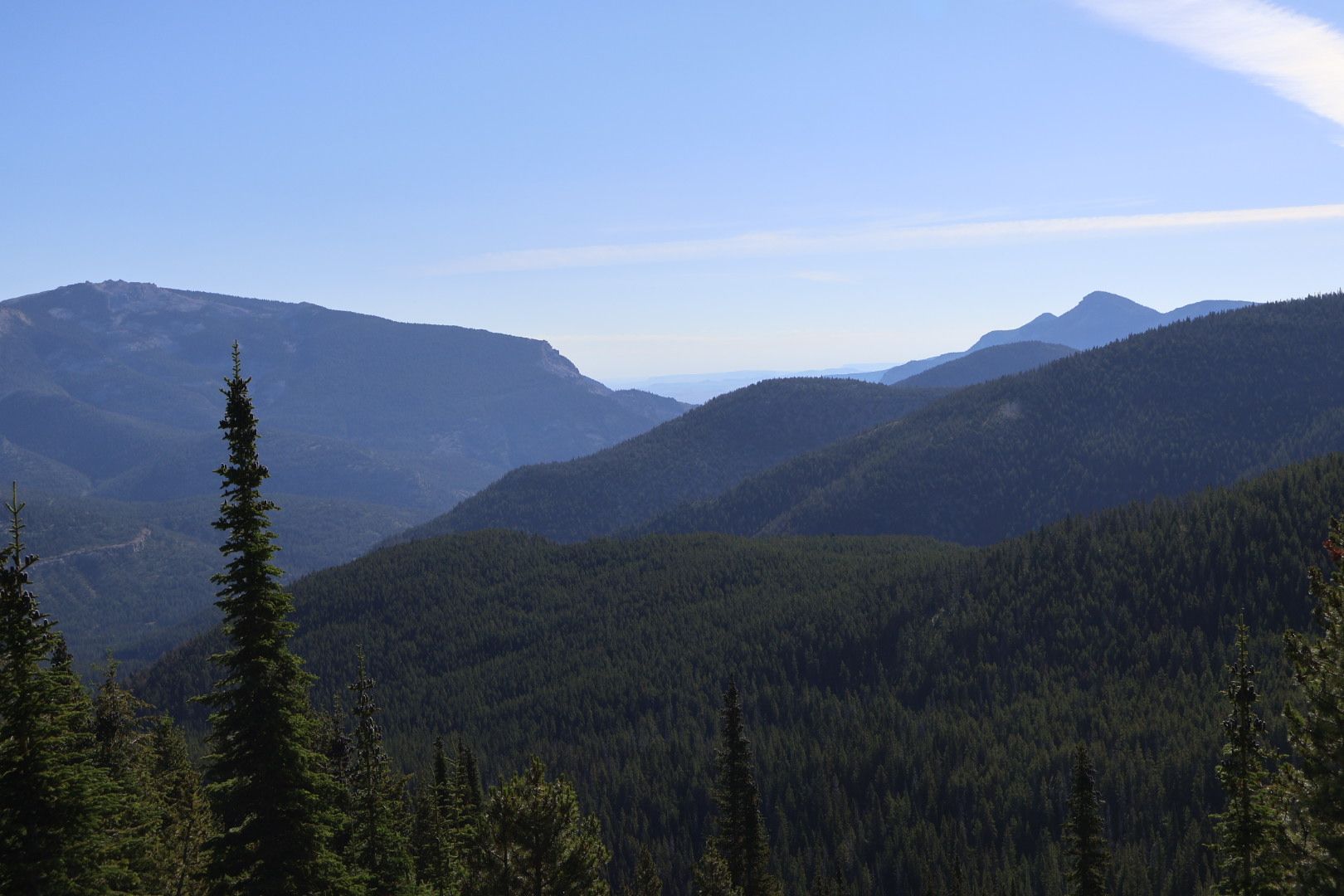
I’m sitting on a ridgeline after a hard climb, catching my breath. There’s a bee, pollen clumped up on his legs, landing on me to gather salt. The wind is steady and I’m learning to tune it out. I look out over the valley I just climbed out of, following the winding trail with my eyes down the switchbacks and along the dry creekbed between the rising sides of the mountains to where it rounds a corner and I can’t trace it any longer. I don’t see anyone else. It’s just me.
Nothing here is created or maintained for me, except for this small footpath, one person wide, stretching out before me. There are no shelters. No privies. No water fountains or piped springs. No roads. It’s simply nature as nature is supposed to be: wild.
There is enough room for the grizzly bears to live as they wish, for the mountain lions to walk their paths. The moose, the elk, the antelope, the bighorn sheep, and mountain goats live as they ought. There are ponds the trails don’t go to. There are places left untouched. The wilderness remains wilderness.
And it’s beautiful.

The preservation of “wild”
In the United States, designated wilderness areas are protected under the Wilderness Act of 1964, one of the strongest forms of land protection in the country. The purpose? To preserve these areas’ natural conditions and wilderness character, free from human development.

This means:
- No motorized or mechanized equipment
- No roads, buildings, or permanent structures
- No commerical enterprises (except for very regulated guided trips through the wilderness)
- Limits to group sizes (you can’t go hiking with a group of people larger than 12)
Rangers and trail maintainers are not allowed to bring in mechanical equipment (chainsaws, etc.), nor to drive in. When there’s trail work that needs to be done, hand tools are backpacked in or packed in by horse.

When was the last time you sat and couldn’t hear cars, the buzz of electricity, the sounds of people? When you walked beyond the reaches of modern civilization and simply rested in the breeze?
The sun touches your back. The hawk rides the thermal. The stream bubbles by your feet. You breathe in deeply and the air is fresh. It was hard to get here, as it should be, and now you can rest.
The ability to cope with nature directly–unshielded by the weakening wall of civilization–is one of the admitted needs of modern times.
Benton MacKaye
Benton MacKaye, the idealist who proposed the Appalachian Trail, understood this need. As life around him spun faster and faster, as his wife struggled with depression and eventually lost her life to suicide, as the rat race continued rat racing, he saw a need: nature.
And from that, from Vermont’s Green Mountains and the fresh grief of his wife’s passing, came the AT and the other long trails.
How true–if even more so–it rings today: we need spaces to breathe, to exist, to be simple, to detach.
I’m so thankful for these vast, untamed patches of wilderness.
Cowboy country

When I reach 290 miles, the trail leaves the wilderness area and I cross the first power lines I’ve seen since I started hiking three weeks ago. There’s a yurt next to them, and it feels so out of place that I stop and stare. Down in the valley, there are houses. I can hear the highway (that hikers will hitch off of into Lincoln) echoing up through the trees. Why are cars so loud?
Even on the AT, I’d never been that long without seeing the signs of civilization pass through the areas where I’d hiked. The realization of how remote and how incredible it was shocked me and humbled me. How amazing it is that we have such places and that I had the opportunity to walk through and experience it.

The mountains have begun lowering and I’ve walked through more valleys. We’ve officially entered Montana’s cowboy country. I’ve already seen some herding, and have walked over more cattle grates than I can count. I’ve been getting water from pipes springs made for cows, walked through herds (this year’s calves are looking amazing, y’all), and passed cowboys working on fences. I’ve fallen asleep to the sound of mountain cows in the distance, and it comfortingly feels like home.

Before I knew it, the trail switched from the single file footpath to dirt and gravel roads as we approached Helena, Montana’s capital. The area is dotted with history: old log cabins resting in mountain clearings, a mine shaft at the base of a mountain, an old wooden trestle bridge with young pine trees growing up through it. I’ve passed by old catch pens in the middle of a pasture and new ranch buildings built next to old ones. I feel like I’m walking through a Western movie.

And yet the CDT goes ever on. Helena is the next resupply stop, and then the trail begins to break up into alternate routes. I’ve yet to decide where I’m going from here, except that I know I’m headed towards the Montana/Idaho border. I’ve heard that’s rugged and gorgeous, and I’m not one to turn that down.

But first: a break, a visit to the outfitters for new socks and potentially new shoes, a cheeseburger. I love my wilderness–but I also do appreciate a hot shower and clean laundry.
Ways to be a trail angel

A hike like this doesn’t happen without the backing of a community. Thank you for all the ways you’ve made this possible for me, through your encouragement, support, and enthusiasm!
If you’d like to do a little bit of trail magic for me, here’s some easy ways:
- Read my blog posts and leave a comment!
- Share a post with someone else you think would enjoy it.
- Add a song recommendation to my Spotify playlist
- Donate towards a resupply (venmo: @Daleen-Cowgar).


Leave a Reply